
Introducing deals and pipelines
We built Carom to be the anti-CRM—a tool that gives rather than takes and that surfaces the key information from the conversations you’re already having, rather than asking you to spend time entering data. Our first version didn’t have deals or pipelines. But based on feedback from early users, we’ve built them with our own spin. I want to walk you through what we’ve developed and why.
There’s a lot here, so this will be the first of two related posts over the next few weeks:
- Today, I’ll provide a walkthrough of our new deals and pipelines, including some of the design decisions we’ve made along the way.
- Next time, we’ll talk about the agentic approach: how we built agents to help you move deals along and keep their statuses in sync with reality—and how that spurred us to rethink autonomous actions vs. suggestions.
Pipelines that aren’t (just) about money
For many companies, the pipeline is purely a sales tool. But it doesn’t have to be: it can be used to track partnerships, applicants, projects, or anything else. We designed our pipeline system with that in mind. Fundamentally, pipelines help you understand what’s moving, what’s not moving, and where you should focus your efforts.
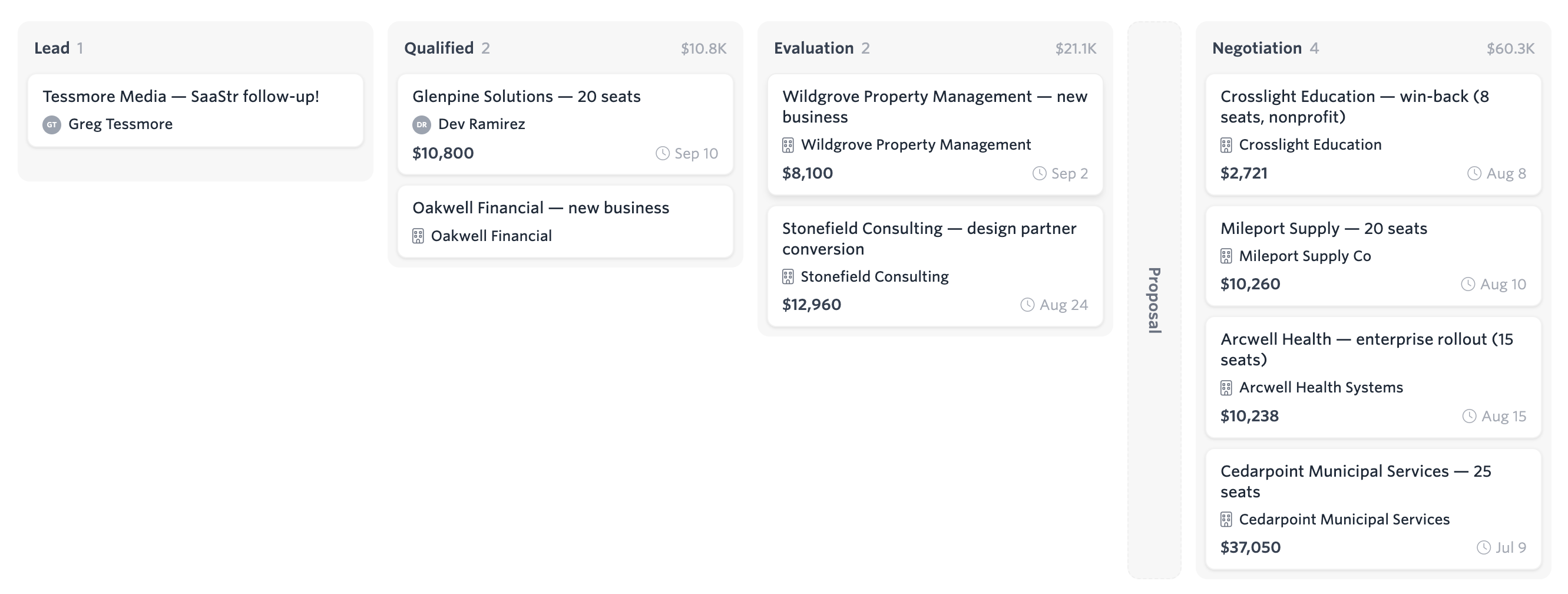
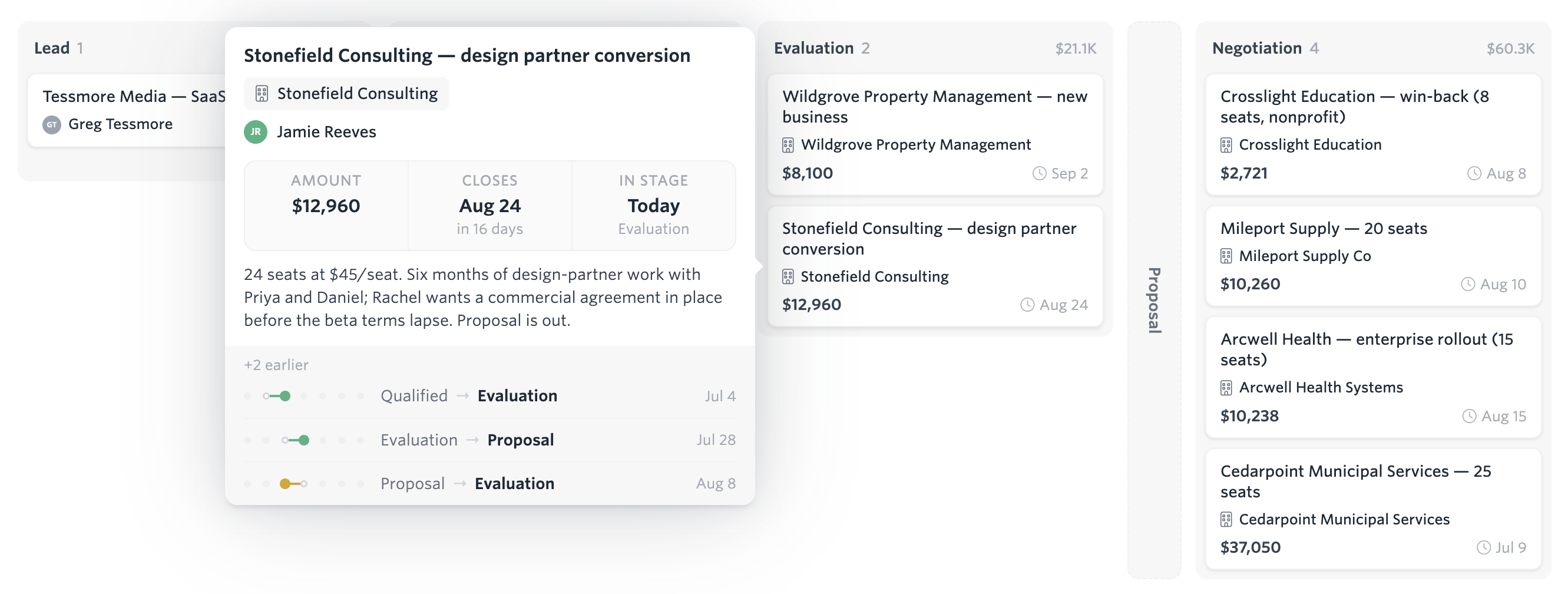
Keep track of all the deals across your organization
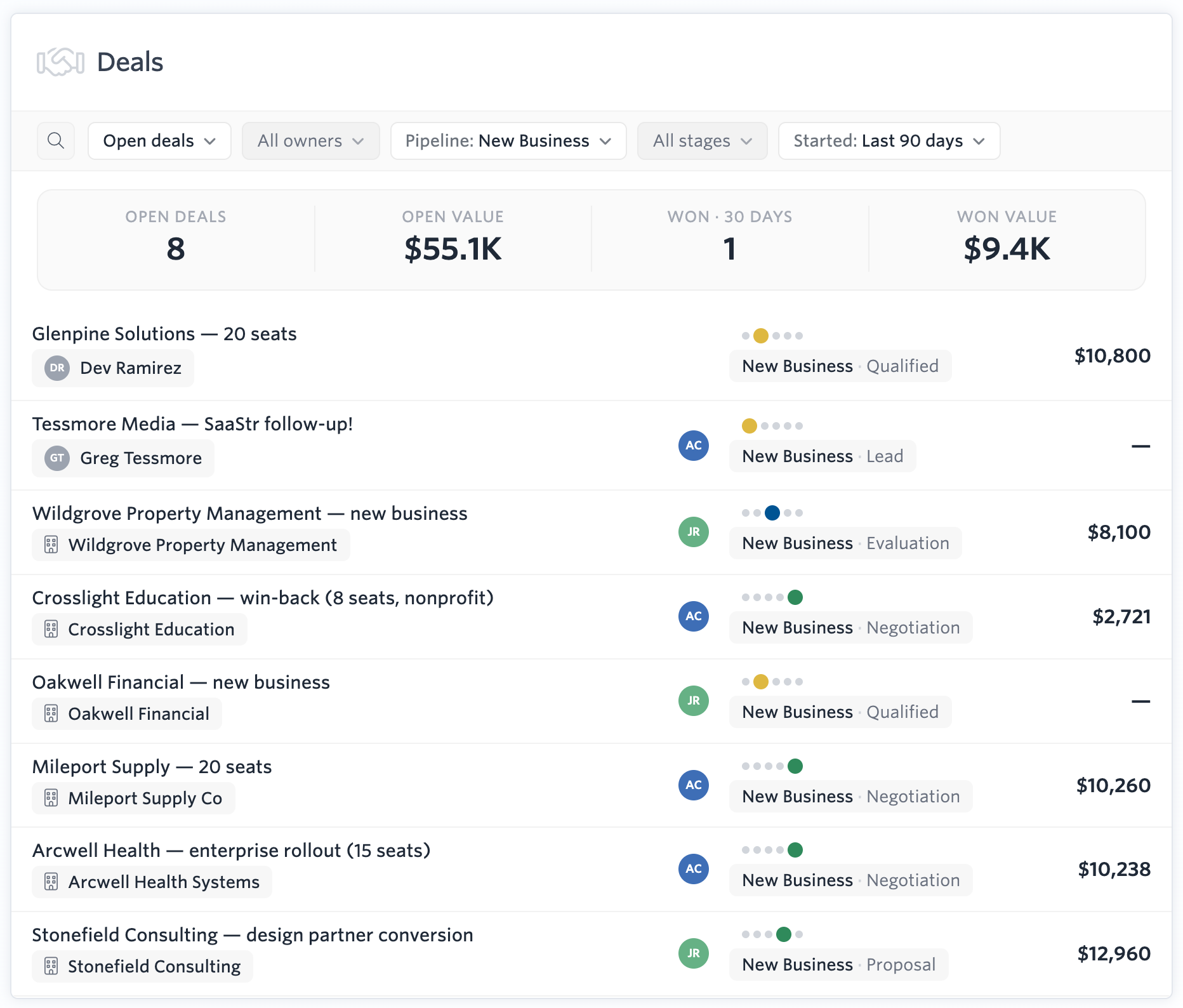
Whether you’re a commercial leader or a deal owner, you can easily see all the deals across the pipelines you have access to. For each one, see at a glance who owns what, how far along the pipeline the deal is, and what’s at stake.
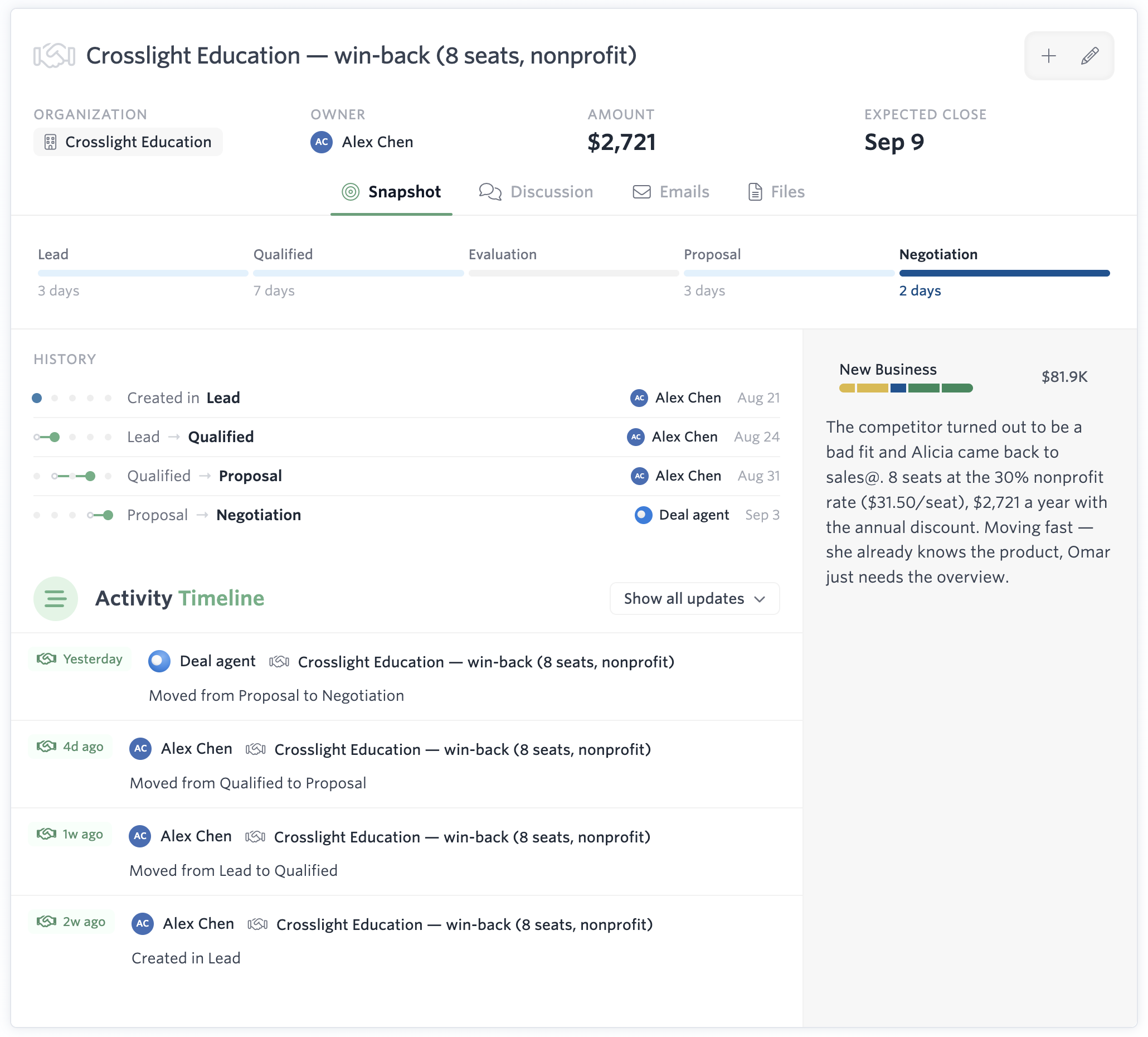
In traditional CRMs, details that require data entry tend to get lost. In Carom, every deal automatically brings together the relevant emails, files, tasks, and conversations across your organization, along with showing clearly what’s happened, when, and why.
Useful reports, without the data analyst
Many CRMs offer powerful reporting options but have no point of view. Yes, if you learn their query language, train yourself to use their tools, or employ the right experts, you can put together reports on just about any slice of your pipeline you want. We chose simple, insightful, and immediate over infinitely flexible.
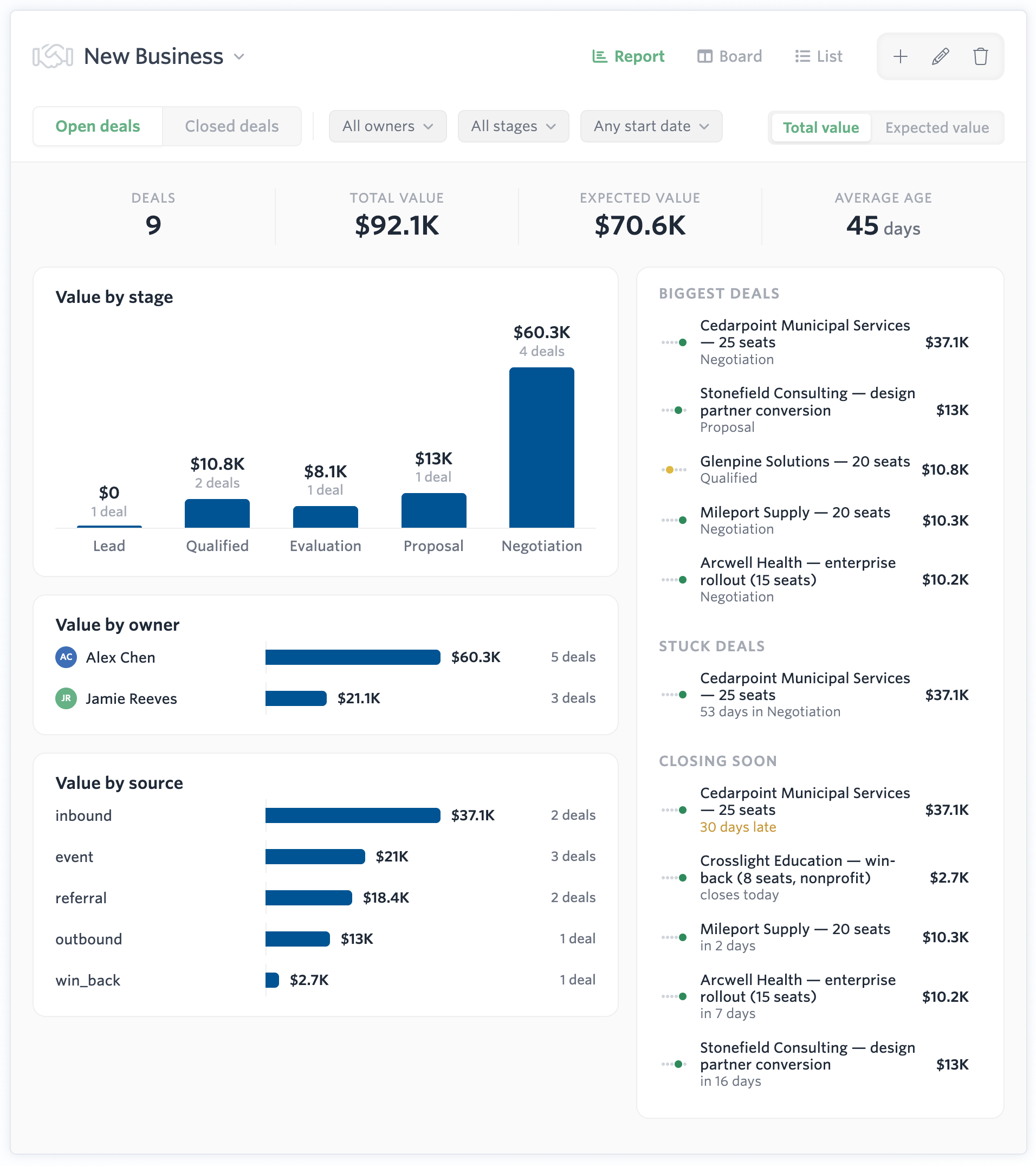
What you’ll see in Carom is something like this—just the relevant details to help you understand progress and opportunities to address stuck deals, lagging deal owners, and pipeline choke points.
Deals and pipelines will be in Carom soon. We’re excited to share more with you, and to talk next time about how we brought AI agents to dealmaking.